US strikes on Iran send oil higher and stocks lower as rate fears grow
The critical market shift is not the equity drawdown itself, but the repricing of the U.S. rate path after renewed U.S.-Iran hostilities pushed oil higher. According to USA Today and Naples Daily News, the U.S.
Beatrice Langdon·updated July 13, 2026
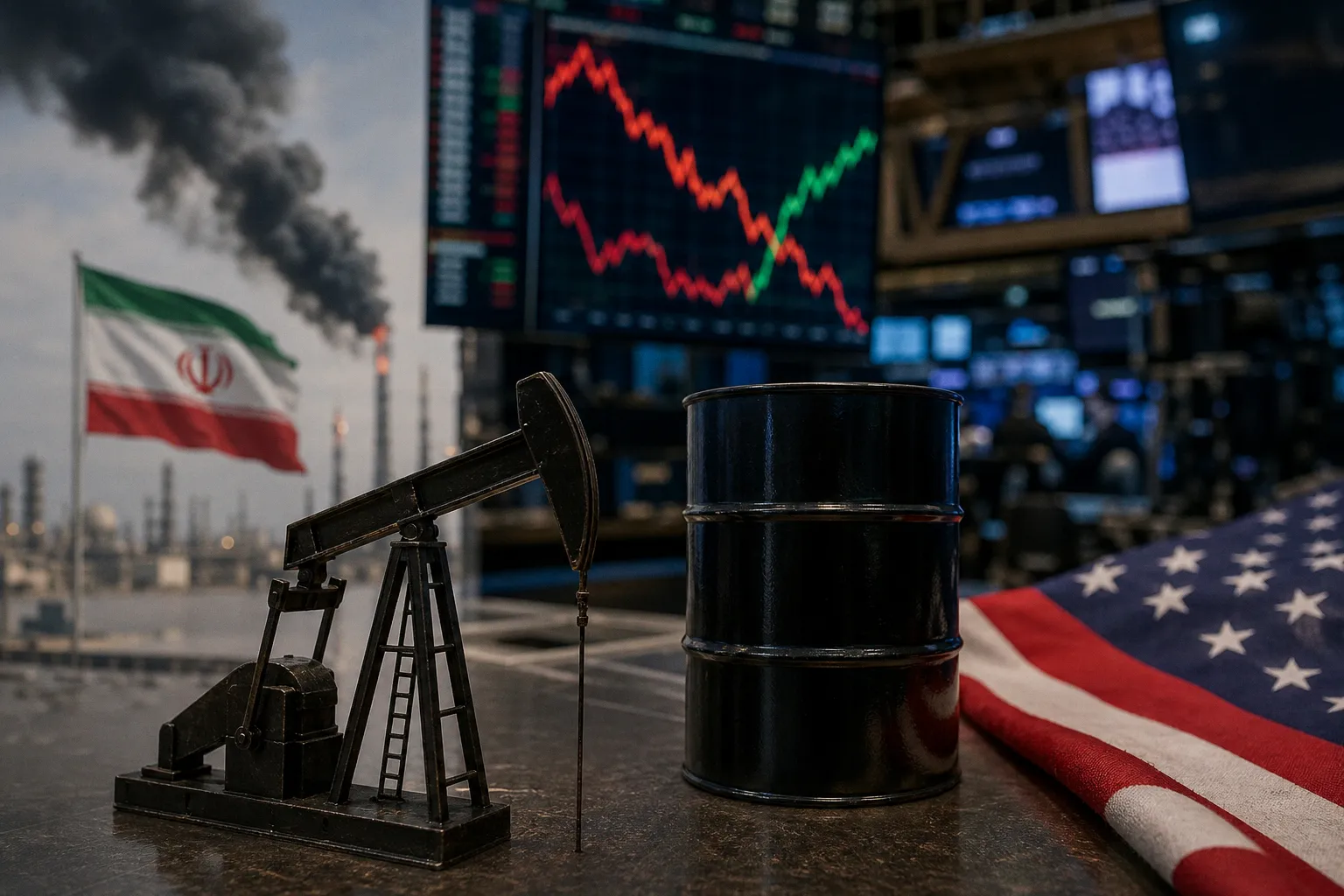
Oil shock reopens the inflation channel
Brent crude, the international benchmark, rose about 4% on Wednesday, moving from roughly $72 per barrel to $77 per barrel after the strikes and the prospect of additional military action. Investing.com separately reported that oil had pared an early 5% surge, but that new U.S.-Iran strikes were still keeping supply fears around Hormuz alive.
That distinction matters. The market did not sustain the full initial move, yet it did not dismiss the risk premium either. The Strait of Hormuz remains central to the pricing impulse described by the sources: attacks on ships moving through the area, followed by U.S. strikes, have reintroduced a geopolitical premium into energy markets.
The equity reaction was comparatively contained but directionally consistent. The S&P 500 was down about 0.4% on Wednesday, while Benzinga reported that Dow Jones, Nasdaq 100 and S&P 500 futures slipped as the U.S. and Iran exchanged strikes. The message from cross-asset pricing is not panic; it is a tighter inflation-risk configuration.
Treasury yields move the Fed discussion
The more consequential move for currencies came in rates. The 10-year Treasury yield reached 4.57% on Wednesday, up from 4.38% about a week earlier. In the current policy framework, that rise is not simply a bond-market adjustment; it is a signal that investors are again demanding compensation for a higher inflation path and a less benign Federal Reserve reaction function.
Market and economic analyst Edward Yardeni told Bloomberg, according to USA Today’s report, that inflation concerns are back in play and that Fed rate hikes are suddenly looking much more likely. Futures pricing moved in the same direction: traders were reported to be assigning nearly a 70% probability to a Federal Reserve benchmark-rate increase at the Sept. 15-16 policy meeting, compared with 40% a month earlier.
The terminal-rate implication is also shifting. Futures prices were cited as indicating a nearly 50% chance of two quarter-point hikes by the end of the year. For FX, this is the core variable: if energy prices sustain pressure on headline inflation, the Fed’s forward guidance becomes harder to interpret as neutral or patient. Rate differentials would then remain more supportive of the dollar against currencies backed by central banks with less room, or less need, to tighten.
Volatility is no longer only an equity issue
The volatility indicators cited in the reports confirm that the repricing is broader than oil. The CBOE Volatility Index moved above 18 on Wednesday, a level the source characterizes as heightened investor anxiety. The CNN Fear & Greed Index rose from 30 to 43 over the past week, remaining in the “Fear” range, though below “Extreme Fear.”
For currency markets, this combination normally requires close monitoring of three prices: Brent, the 10-year Treasury yield, and short-dated Fed expectations. If oil remains bid while yields continue to rise, the dollar may trade less as a pure safe-haven instrument and more as a rate-differential asset. If oil retraces while yields hold elevated levels, the market will be indicating that the policy premium has become more durable than the commodity impulse.
The practical conclusion is restrained but important. Renewed U.S.-Iran hostilities have moved the market’s focus from ceasefire risk to inflation persistence, and from equity sensitivity to Federal Reserve optionality. Until the oil move, Treasury repricing and September Fed probabilities stabilize, major currency pairs are likely to remain governed by rate expectations rather than by equity sentiment alone.