Evaluate Treasury Yields Against Fed Rates for USD Trades
The spread between the two-year Treasury note and the Federal Funds Rate has compressed to levels that, historically, signal an inflection point in monetary policy expectations.
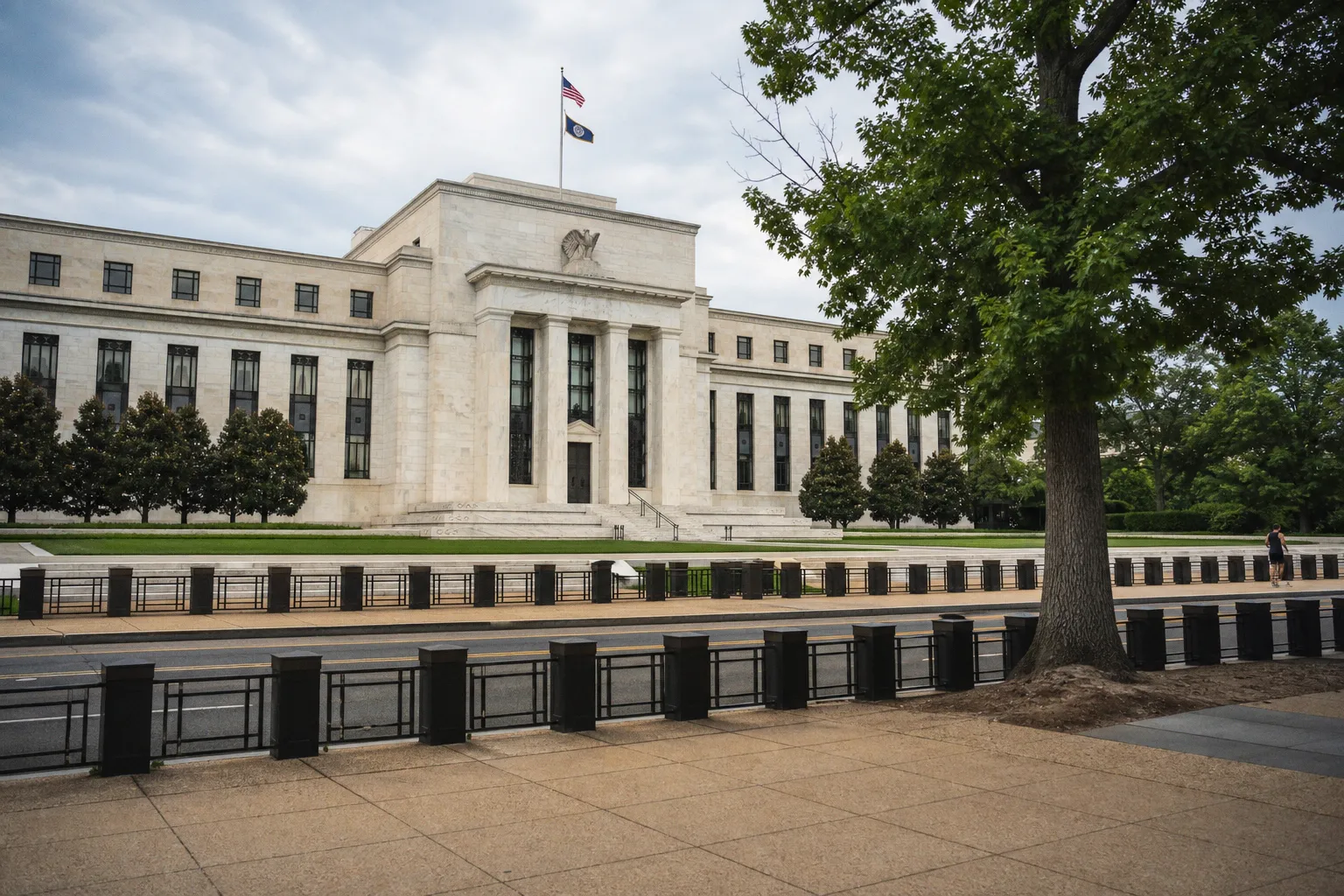
Understanding the mechanics that connect Treasury yields to the Federal Reserve's policy rate is not an academic exercise. It is the foundation of any credible USD macro thesis. The relationship between market-determined yields and the administered federal funds rate reveals where capital allocators stand relative to the central bank's own forward guidance — and, more importantly, where they disagree.
The Mechanics of the Fed Funds Rate and Market-Driven Yields
The Federal Funds Rate is an administered rate. The Federal Open Market Committee sets a target range — currently maintained at eight scheduled meetings per year — and the effective rate gravitates toward the midpoint through open market operations and the interest on reserve balances mechanism. It does not respond to supply and demand in the same manner as a Treasury security. It is a policy tool, not a market price.
Treasury yields, by contrast, are determined entirely by auction dynamics and secondary market trading. A 10-year Treasury note yield reflects the collective assessment of thousands of institutional participants regarding inflation expectations, fiscal trajectory, term premium, and the anticipated path of short-term rates over a decade-long horizon. The 2-year yield, being more sensitive to near-term policy expectations, behaves as a proxy for the market's best estimate of where the federal funds rate will sit 24 months forward.
This distinction is fundamental. The Fed controls the overnight rate. The market prices the entire yield curve. When these two signals diverge — when the Fed commits to a restrictive stance while the 2-year yield drifts lower — the resulting tension produces actionable information about the likely trajectory of USD pairs.
The spread between administered policy rates and market-determined yields is not noise — it is the single most honest gauge of where institutional capital believes monetary policy is headed next.
Decoding the Two-Year and Ten-Year Treasury Sensitivity to Monetary Policy
The two-year Treasury note functions as the market's real-time referendum on Fed credibility. Because its duration roughly spans the interval between successive policy cycles, movements in the two-year yield closely track shifts in federal funds rate expectations. When the FOMC signals a terminal rate of 5.25–5.50%, and the two-year yield trades at 4.80%, the 45-basis-point discount implies that the market anticipates a rate cut within the forward horizon. The magnitude of that discount — or premium — quantifies the degree of policy dissent between the Fed and bondholders.
The 10-year yield operates on a different calculus. It embeds not only the expected average of short-term rates over its maturity but also a term premium: compensation for the uncertainty of holding a longer-duration asset. The term premium itself fluctuates with fiscal supply dynamics, inflation breakevens, and global demand for safe assets. A rising 10-year yield amid a stable federal funds rate does not necessarily signal hawkish expectations — it may reflect expanding Treasury issuance, deteriorating fiscal outlooks, or a repricing of inflation persistence.
| Metric | 2-Year Treasury | 10-Year Treasury | Federal Funds Rate |
|---|---|---|---|
| Primary sensitivity | Near-term Fed policy path | Long-term growth and inflation expectations | FOMC vote at each meeting |
| Price driver | Rate cut/hike expectations | Term premium, fiscal supply, global safe-haven flows | Administrative decision |
| Typical reaction lag to FOMC | Minutes to hours | Days to weeks (indirect) | Immediate (announced) |
| Use in USD positioning | Short-term directional bias | Structural trend assessment | Benchmark anchor |
The interplay between these three rates defines the architecture of the yield curve. Their relative movements — and the persistent gaps between them — encode the market's conviction about the economic cycle's phase.
Interpreting the Yield Curve Spread as a Gauge for Economic Sentiment
The 2s10s spread — the difference between the 10-year and 2-year Treasury yields — is among the most closely monitored indicators on institutional trading floors. A positive spread (longer yields exceeding shorter yields) indicates a normal curve, consistent with expectations of economic expansion and a stable or rising rate environment. An inverted spread, where the 2-year yield exceeds the 10-year, historically precedes recessionary conditions, though it operates as an indicator with variable lead times rather than a deterministic signal.
The spread's predictive power lies in its reflection of collective institutional positioning. When the 2s10s inverts, it means that market participants collectively believe the Fed will need to cut rates in the future — that the current restrictive stance is unsustainable. The depth and duration of inversion correlate with the severity of anticipated economic deceleration.
For USD traders, the spread's directional movement often matters more than its absolute level. A steepening curve from inversion — where the spread moves from negative toward zero or positive — can signal that the market is pricing in imminent easing. Conversely, a curve that remains deeply inverted despite incremental Fed pauses suggests that the market doubts the sustainability of the current policy framework entirely.
Key interpretive signals for positioning:
1. Spread narrowing from positive territory — markets anticipate the Fed will hold or begin easing; short USD positioning gains structural support against currencies of central banks with clearer tightening paths.
2. Spread deepening into inversion — terminal rate expectations rise above long-term growth confidence; USD may strengthen on a flight-to-safety bid even as recessionary expectations build.
3. Rapid steepening post-inversion — historically aligned with the onset of easing cycles; USD tends to weaken against higher-yielding peers as yield differentials compress.
4. Parallel shift across the curve — a synchronized rise or fall in both tenors suggests a macro repricing rather than a policy-specific event; USD direction depends on whether the shift is inflation-driven or growth-driven.
Aligning FOMC Meeting Cycles with Macroeconomic Data Releases
The FOMC convenes eight times annually, with each meeting accompanied by a policy statement and a Summary of Economic Projections released quarterly. The rhythm of these meetings creates a recurring structure around which macroeconomic data assumes variable significance. Employment reports, CPI prints, and PCE data do not carry equal weight across the calendar — their impact on Treasury yields and, by extension, on USD valuation depends on their proximity to the next scheduled FOMC decision.
A CPI surprise in the first week after an FOMC meeting carries less immediate policy weight than an identical surprise two weeks before the subsequent one. The market's sensitivity to incoming data escalates as the next meeting approaches, particularly when the Fed has signaled data-dependency in its forward guidance. This asymmetric information sensitivity creates identifiable windows of elevated volatility in Treasury yields.
The release calendar itself functions as a structural overlay:
- Non-farm payrolls (first Friday of each month) — the single most market-moving labor indicator; strong prints reinforce hawkish expectations, pushing the 2-year yield higher and steepening the front end of the curve.
- Consumer Price Index (typically mid-month) — core CPI ex-food and energy is the metric the Fed references most frequently in its inflation mandate assessment; persistent above-target readings sustain elevated terminal rate expectations.
- Personal Consumption Expenditures (late month) — the Fed's preferred inflation gauge; its divergence from CPI often recalibrates market assumptions about the central bank's reaction function.
The institutional approach is to map each data release against the current implied probability of the next FOMC action, derived from fed funds futures pricing. A strong employment report that shifts the probability of a 25-basis-point hike from 12% to 38% will propagate through the yield curve within minutes, repricing the 2-year and, with a lag, influencing the 10-year through revised growth and inflation assumptions.
Navigating Divergence Between Policy Expectations and Market Reality
The most structurally significant periods for USD positioning emerge when the Fed's communicated stance diverges materially from market pricing. This divergence does not arise from informational asymmetry alone — it reflects fundamental differences in analytical frameworks. The Fed anchors its decisions to a dual mandate of price stability and maximum employment, filtered through a Phillips Curve–informed reaction function. Bond markets, meanwhile, price in fiscal sustainability, global capital flows, geopolitical risk, and the relative attractiveness of USD-denominated assets against sovereign alternatives.
When the Fed maintains a hawkish posture — holding rates at restrictive levels and signaling further tightening — while the 2-year yield declines persistently, the divergence constitutes a structural disagreement about the economic trajectory. Historically, the market has tended to anticipate easing cycles earlier than the Fed communicates them. The 2023–2024 cycle illustrated this pattern with clarity: terminal rate expectations peaked well before the final hike, and yield curve dynamics began pricing cuts months ahead of any formal pivot in Fed language.
For USD traders evaluating this divergence, the calibration framework involves three dimensions:
1. Magnitude — a 20-basis-point gap between the 2-year yield and the implied terminal rate is within normal noise; a sustained 80-basis-point divergence signals a fundamental repricing.
2. Duration — transient divergence around a data release resolves within days; persistent divergence over multiple FOMC cycles indicates that the market is building a structural alternative to the Fed's narrative.
3. Breadth — when divergence appears in the 2-year alone, it may be positioning-driven; when it propagates across the 5-year, 10-year, and 30-year tenors, it reflects a comprehensive reassessment of the policy path.
The practical implication for currency positioning is direct. A Fed that holds rates against a backdrop of declining market expectations for those same rates is, in effect, tightening financial conditions relative to what the market believes is appropriate. This dynamic tends to support USD in the short term but erodes the foundation of that support as economic data accumulates on the side of the market's thesis.
The market does not wait for the Fed to announce a pivot — it prices the pivot in yield curve dynamics months before the statement catches up.
Ultimately, the relationship between Treasury yields and the Federal Funds Rate is not a static formula to be applied mechanically. It is a dynamic, continuously repriced reflection of institutional conviction about the direction of the world's most consequential monetary policy. Traders who monitor the spread between market expectations and central bank rhetoric — and who calibrate their positioning to the magnitude, duration, and breadth of any divergence — operate with an information architecture fundamentally superior to those who interpret FOMC statements in isolation. The yield curve does not predict perfectly, but it encodes the collective judgment of capital at a scale and speed that no single analyst can replicate. Reading it methodically is not optional for anyone managing USD exposure at an institutional level.