Federal Reserve H.15 Data Confirms Effective Fed Funds Rate at 3.63%
The Federal Reserve's daily H.15 release confirmed the effective federal funds rate at 3.63% for July 15, placing the benchmark squarely within the current target corridor.
Beatrice Langdon·updated July 17, 2026
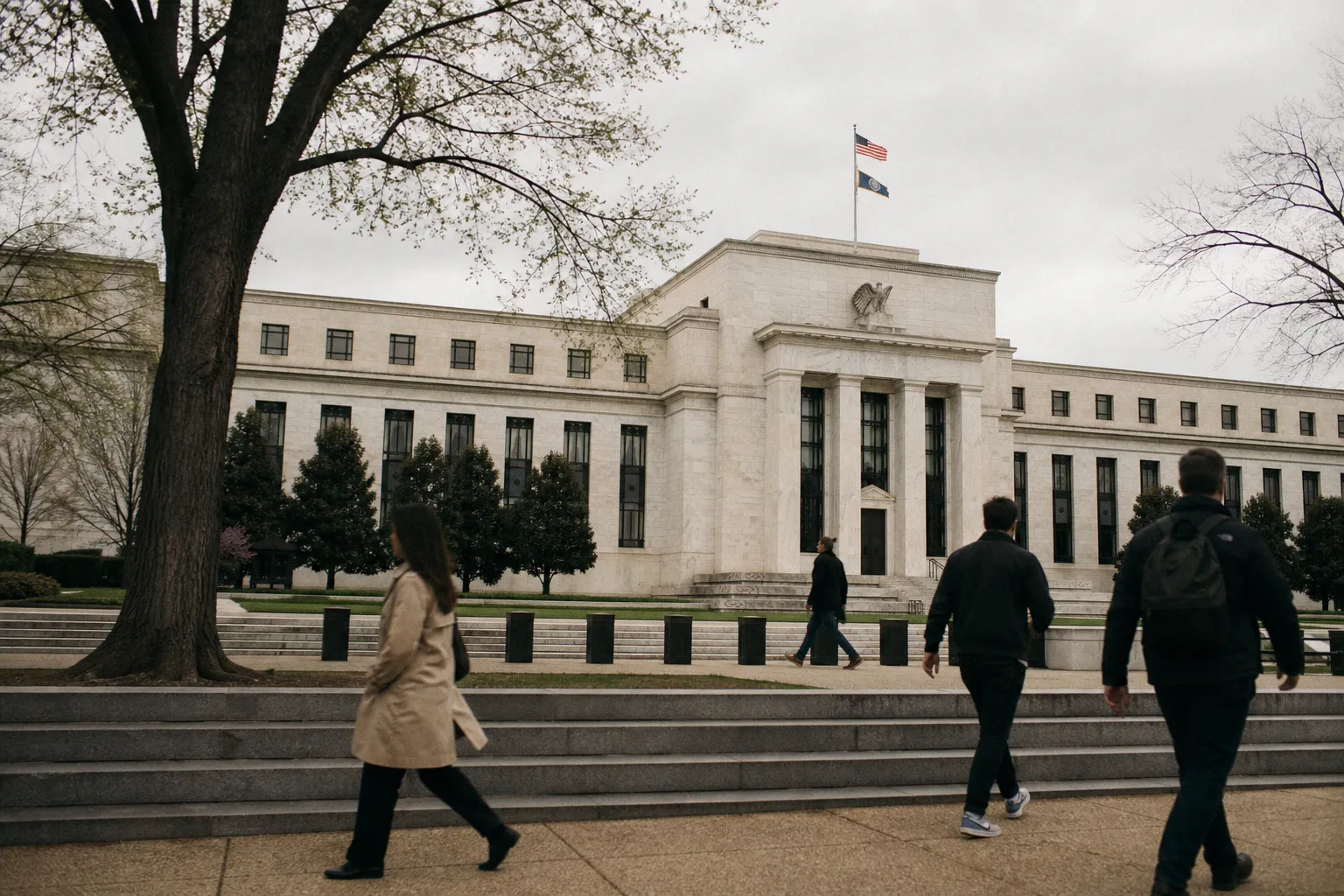
Meanwhile, 1-year Treasury bills were trading at 3.80%, implying a 17-basis-point term premium over the overnight rate. For currency desks parsing the rate differential landscape, the spread signals that front-end pricing has not fully converged around imminent easing expectations.
Spread Mechanics and What 17 Basis Points Signal
The gap between the effective fed funds rate and 1-year T-bill yields is a compact forward gauge. A 17-basis-point premium over the policy rate suggests the short end of the curve is pricing in modest carry — not a decisive directional bet on imminent rate cuts, but enough term compensation to indicate the market is neither fully discounting a hold-through nor front-running aggressive easing. For dollar positioning, this means the front end remains anchored by data dependency rather than a clear forward guidance pivot. Traders watching session-driven volatility should note that any incoming data shift — labour prints, PCE readings — could compress or widen this spread rapidly.
Institutional Positioning in a Data-Dependent Window
The H.15 confirmation at 3.63% arrives in a context where the Federal Open Market Committee has maintained its posture of patience. The effective rate sitting modestly below the upper bound of the target range reflects standard reserve dynamics and the ongoing balance-sheet runoff through quantitative tightening. For global macro desks, the operative question is whether this level of the policy rate is sufficient to maintain real-rate restrictiveness as inflation metrics evolve. The 1-year T-bill yield at 3.80% implies that duration buyers are still extracting marginal term premium without aggressively pricing a terminal rate move lower — a posture consistent with a market awaiting clearer forward guidance before repricing the curve in earnest.
Dollar Implications and Rate Differentials
Across G10 currency pairs, a stable effective rate with modest front-end term premium reinforces the dollar's carry advantage against peers where central banks have already embarked on easing cycles. The 17-basis-point spread is narrow enough to suggest the market is not pricing significant policy divergence within the Fed's framework, but wide enough to keep short-dollar positions costly. For portfolio managers tracking rate differentials against the ECB, Bank of England, or Bank of Japan, the effective rate at 3.63% maintains the Fed's relative hawkish footing. The next recalibration point will arrive with the next FOMC statement and updated dot plot, which could either compress this spread toward zero or push it wider depending on the committee's revised median projection.
The H.15 data is a single snapshot, but in a market obsessed with parsing every basis point of carry and term structure, even a routine confirmation of the effective rate becomes a data point in the broader puzzle of global content streaming shifts that compete for attention alongside real-time rate feeds on trading floors. For now, the spread structure tells us the Fed remains firmly in a hold pattern — and dollar strength, for the moment, remains a function of differential rather than directional conviction.